Loading...
Our History — Mosteiro Maria Imaculada, Poor Clares of Marília
Our Mother St. Clare
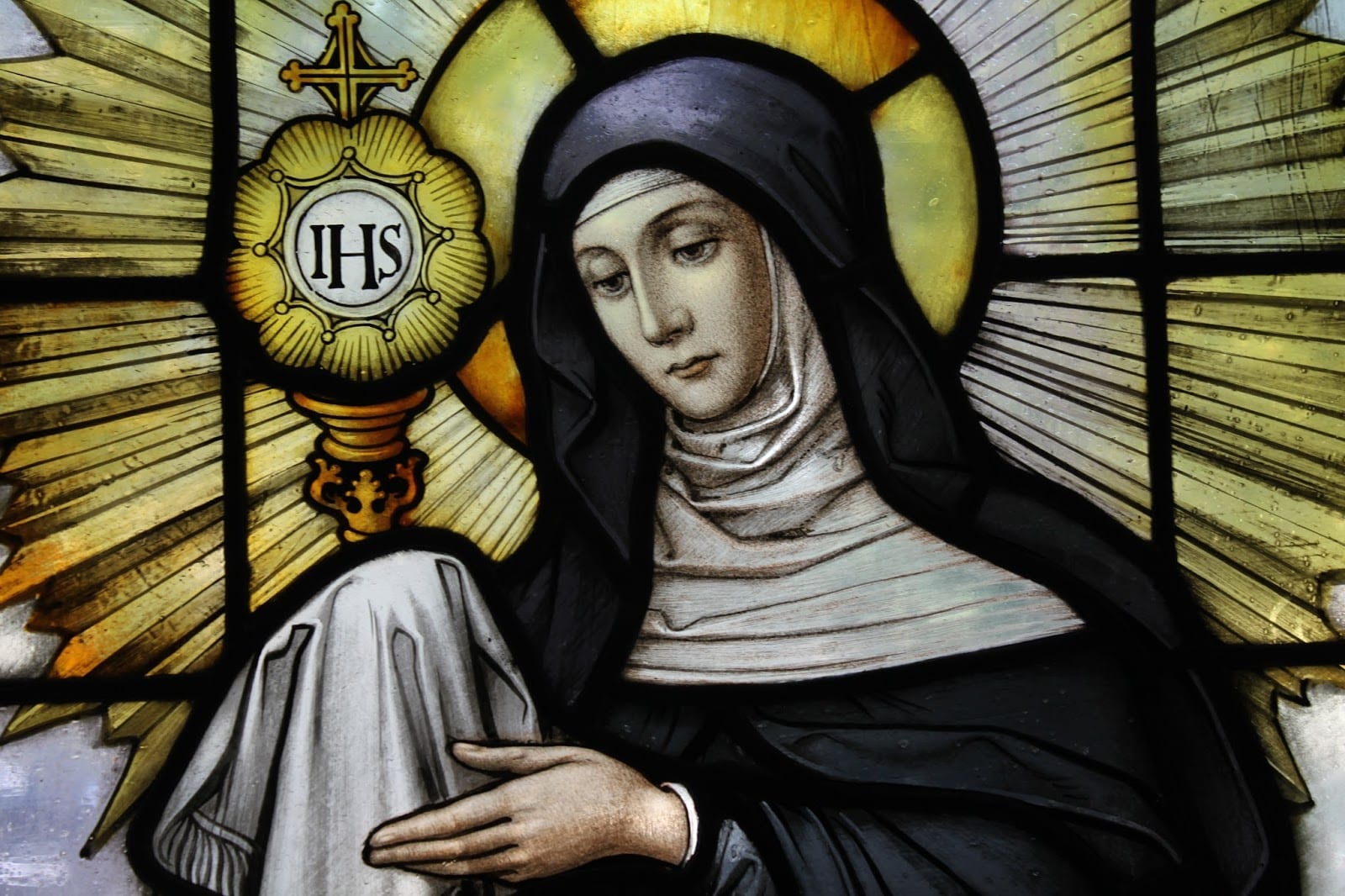
On March 18, 1212, the young Clare left her father's house during the night and made her way to the little church of Santa Maria degli Angeli at the Porziuncola. There, the enthusiastic Francis and his followers awaited her; for some years they had been bringing a new breath of evangelical renewal to the whole world. Kneeling before the altar of the poor church, Clare laid aside her rich garments and received the insignia of penance: the brown habit, the white cord, and the black veil. There she professed the Holy Vows and gave birth in the Church of God to a new family: the Order of Poor Sisters, or, as it would be called after her canonization, the Order of St. Clare (known as the Poor Clares).
After overcoming with admirable strength the opposition of her relatives, Mother Clare was finally led to the Monastery of San Damiano, to that church where the Seraphic Father Francis heard the Crucified speak to him: "Francis, go and repair my church which, as you see, is in ruins." There Clare brought forth a community of virgins, founded a holy monastery, and laid the foundations of the Order of Poor Ladies. (...) There, by her own journey, she showed the way to all who were to follow her. In the narrowness of this enclosure, she sacrificed with penances the alabaster of her body for forty-two years, so that the whole Church might be filled with the fragrance of her holiness. (Legend of St. Clare the Virgin)
Soon hundreds of women eager to follow in the footsteps of the Poor and Crucified Christ joined her. Queens and princesses abandoned their palaces and comfortable lives to enter among the poor spouses of Christ; nobles, peasants, and burghers flocked to the cloister gates asking to live her Form of Life. Thus, during her lifetime, it is estimated that one hundred and twenty-five monasteries had been founded.
On August 10, 1253, embracing the bull of approval of the Holy Rule, the Seraphic Mother made her sacred passage from this world to the heavenly homeland. Yet the flame of her life continues to burn across the centuries through her daughters who, spread throughout the world, radiate and keep alive the witness of her total surrender to the Lord.
Holy Mother Colette
“But human nature, always prone to weakness, needs secure defenses. A flame needs a strong current of air to sustain it. And changing historical environments require their own expressions of an immutable ideal.”
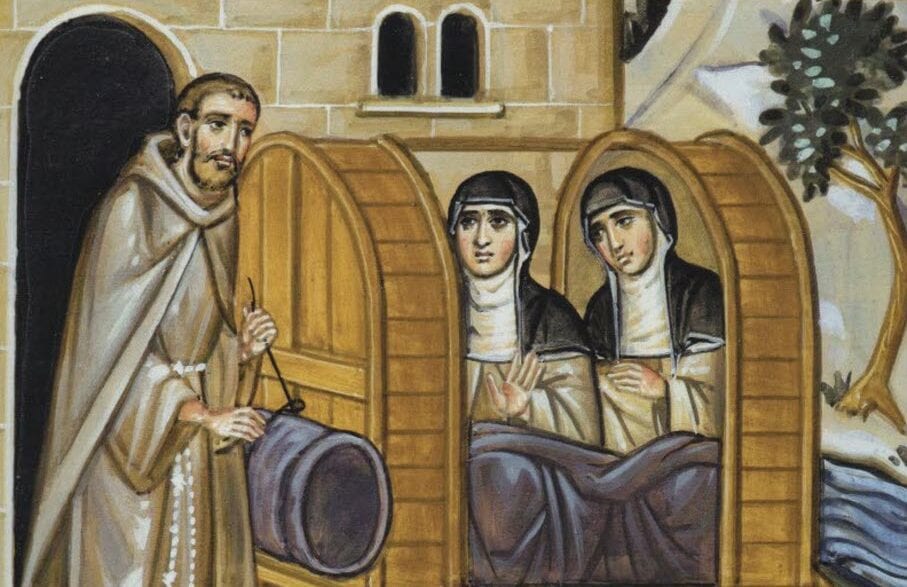
A few centuries after the death of our Seraphic Fathers, the evangelical ideal they had courageously undertaken was in great danger. Their own children had neglected the inheritance received, and laxity prevailed in the Orders they had founded. Thus God raised up, from the recesses of His mercy, a young Frenchwoman named Colette of Corbie.
In 1406, at the age of 25, our Holy Mother Colette received papal authorization to begin the reform of the Three Orders founded by Father St. Francis: the Friars Minor, the Poor Clares, and the Third Order. On March 6, 1447, she surrendered her soul to the Lord at the Monastery of Ghent, Belgium, leaving a group of 16 monasteries founded or reformed under the Rule of St. Clare, with the Holy Constitutions she herself had drawn up. These Constitutions were approved in 1434 by Minister General William of Casale and confirmed by Pius II in 1458.
Since the foundation of the monastery of Colettine Poor Clares of Ghent (Gent) in 1442, the community became one of the most fruitful of St. Colette's reform in Europe. In 1845, Ghent founded the monastery of Tongeren, which sent Sisters for the foundation of the monastery of Düsseldorf, Germany, in 1859. In 1885, after the suppressions resulting from the French Revolution, the Sisters of Ghent restored the monastery of Tongeren.
In 1928, the valiant Sisters of Düsseldorf crossed the ocean to establish the first monastery of Colettine Poor Clares in Brazil, in Rio de Janeiro. From this house several monasteries of the Order were founded in our country, including the Monastery of Our Lady of Guadalupe in Caicó, Rio Grande do Norte, in 1984.
Our Monastery in Marília
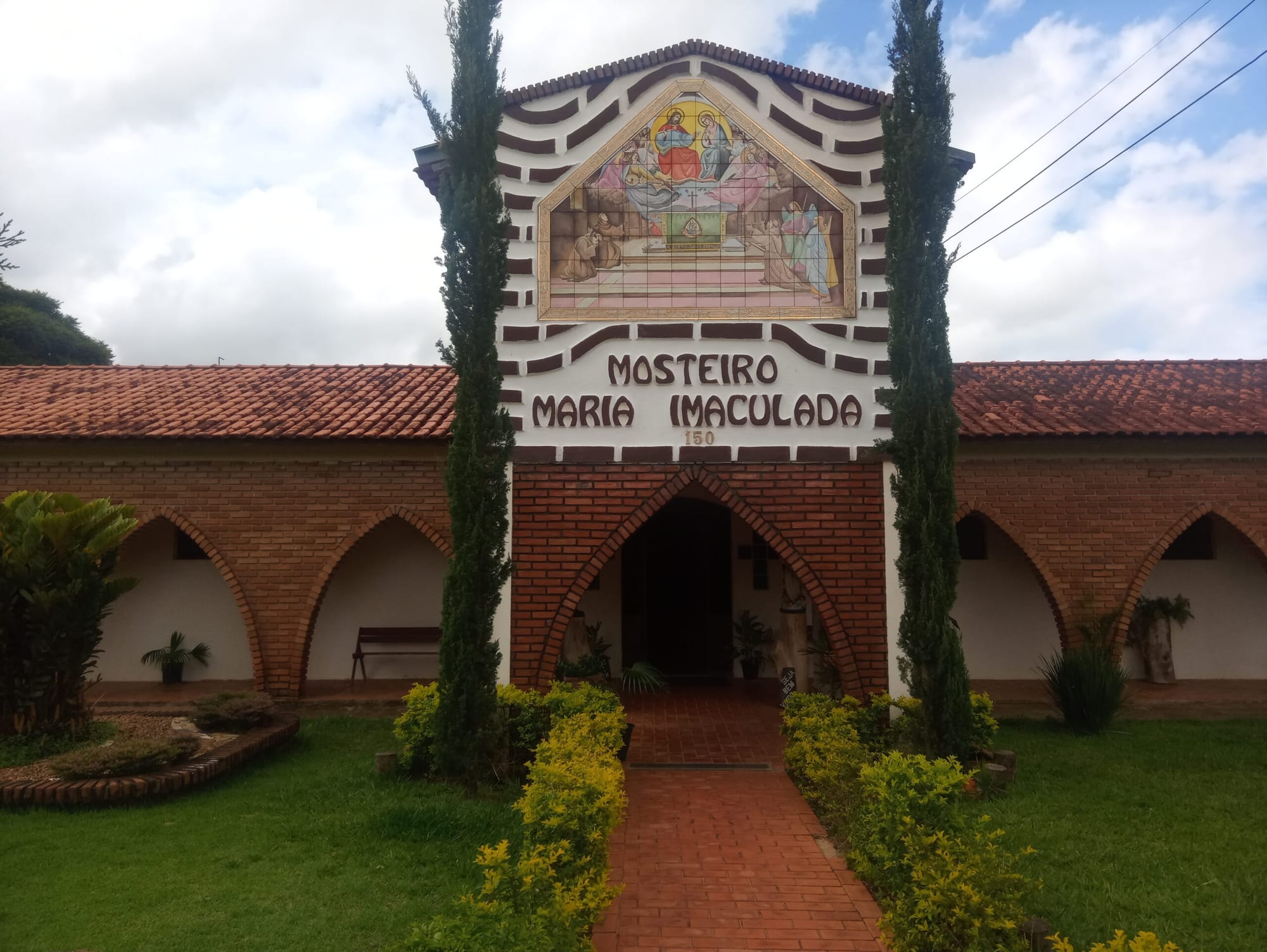
Fifteen years after its foundation, the Monastery of Caicó had 36 Sisters. As the building was relatively small, with only 33 cells, and given the entrance of several other young women, the Sisters deemed it fitting to respond to the request of the Franciscan Custody of the Sacred Heart of Jesus for the foundation of a Poor Clare monastery in Marília. On July 16, 1999, the Holy See gave consent for the beginning of the foundation.
With everything prepared, our six founding Sisters crossed our vast country on a ten-day bus journey and arrived in Marília on September 19, 1999.
The Sisters remained in a provisional house with an adapted chapel until October 15, 2000, when, after a solemn procession through the city, His Excellency the Most Rev. Dom Osvaldo Giuntini, Bishop of Marília at the time, blessed the Monastery and handed the Sisters the key of enclosure. Thus was established Mosteiro Maria Imaculada.
After more than 25 years of presence in Marília, our community remains as a silent witness that constitutes an appeal to prayer and to the truth of God's existence (Verbi Sponsa no. 8). In our beautiful and simple life as Poor Clares, we offer our prayers, works, and sacrifices for the whole Holy Church, so that all men may reach the ultimate end of their lives: full union with God. We unite our sufferings and our life of penance with all those who also suffer, begging the Lord for the graces they need and relief from their pains. And we offer our constant joy so that, in our times, modern man may rediscover happiness in Him Who alone can satisfy the longing of our heart: God!
Genesis of the Monastery
San Damiano Monastery
Assisi, Italy
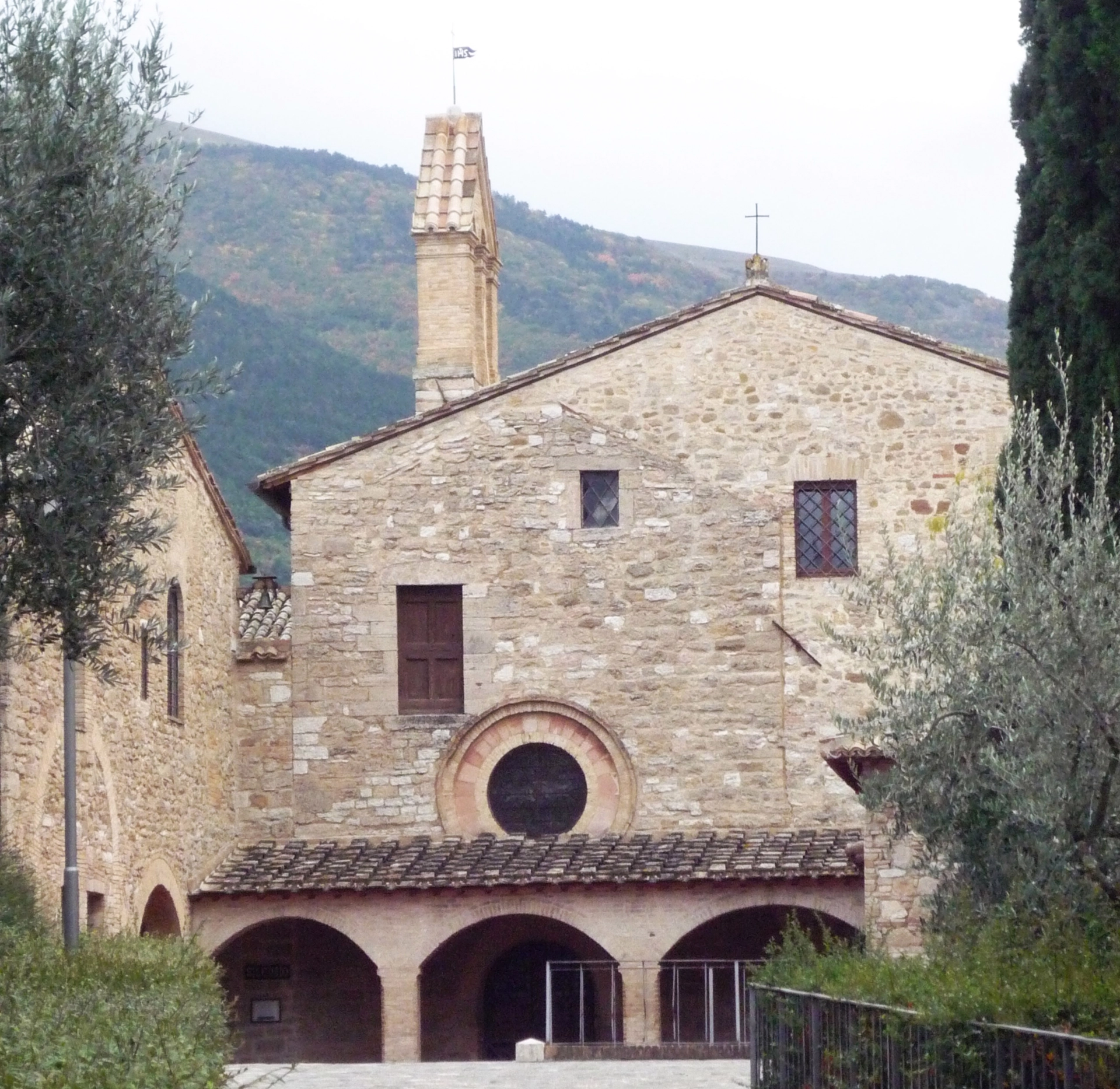
In 1212, under the guidance of St. Francis, the young Clare of Assisi began at San Damiano Monastery, together with some sisters, a life of penance, prayer, and work, in the highest poverty, wholly dedicated to contemplation. There arose the Order of St. Clare, or the Second Franciscan Order.
St. Elizabeth of Hungary Monastery
Reims, France
The Archbishop of Reims, Alberic, returning from the Lateran Council (1215), visited San Damiano and asked the Seraphic Mother Clare to send her daughters to France. In 1219, Sr. Maria de Braye left Assisi and was received the following year in Reims by Alberic's successor, Guillaume de Joinville.
“Seeing that Sister Maria de Braye found that God blessed her small work day by day, and that the number of daughters was increasing, she wished to give an account to her blessed Mother St. Clare, whom she honored as much in absence as in presence, honoring her as abbess and superior, writing to her with a very humble plea to accept them all as her daughters, who all greeted her and prostrated themselves at her feet, in manifest obedience and submission, as their beloved abbess and superior, in the person of Sr. Marie de Braye, her vicaress, who held her place in her small monastery of Reims. (Remarques de l'établissement du monastère de Sainte Claire de Reims)”
Only after the death of Sr. Maria de Braye (1230), at the suggestion of our Mother St. Clare and the minister general of the Order, was the first abbess elected "of the poor sisters of San Damiano of Reims." On November 20, 1237, the Archbishop of Reims consecrated the monastery's small church and dedicated it to St. Elizabeth, who had just been canonized (1235).
Colettine Reform: Besançon Monastery
France
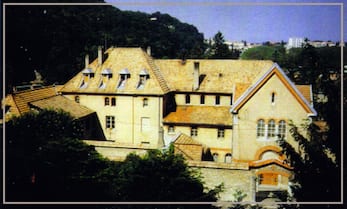
The monastery of Besançon was founded in France in 1290 by the sisters of Reims. For various political and ecclesiastical reasons, this monastery and many others ceased to observe the Holy Rule written by the Seraphic Mother, adopting the Rule of Pope Urban IV.
God, guardian of His holy work, was preparing a return to primitive observance and, for this purpose, called from a small reclusory in the town of Corbie the young Colette Boylet, aged 24. On October 16, 1406, His Holiness Benedict XIII received Colette's vows and issued the bull authorizing the reform she proposed. He named her General Superior of all Poor Clare monasteries she would found or reform.
The Pope authorized her to take possession of the Urbanist Poor Clare monastery of Besançon on January 27, 1408. Holy Mother suffered serious opposition from this community, and only two years later, on March 14, 1410, was she finally able to complete the reform. The Countess of Geneva herself accompanied them with a large retinue.
It was at Besançon that St. John of Capistrano met Mother Colette, saying: "I believe your reform is in accord with God and St. Francis; persevere, as you have begun, for God is with you."
Bethlehem Monastery
Ghent, Belgium
Bethlehem Monastery was founded by St. Colette in 1442, at the request of the magistrates of Ghent, Belgium. The sisters came from various French monasteries.
Holy Mother Colette returned to this monastery on December 6, 1446 and died three months later, on March 6, 1447.
With the religious persecutions during the time of the revolutions, the community of Ghent was dispersed. In 1812, six surviving religious tried to restore their community. They had been forbidden by the Dutch government, to which the city belonged, to receive novices, and only in 1830 were they able to recover all their rights. Since then the convent expanded to receive the novices who came there, and the community began to flourish under the impulse of Mother Giovanna Francesca Dumortier: "most zealous for the tradition of St. Colette, she gathered these traditions into a collection."
Tongeren Monastery
Tongeren, Belgium
In 1845, Ghent founded a monastery in Tongeren with Mother Maria Lucia. This monastery also welcomed German sisters who were exiled due to state secularization.
Sacred Heart Monastery
Düsseldorf, Germany
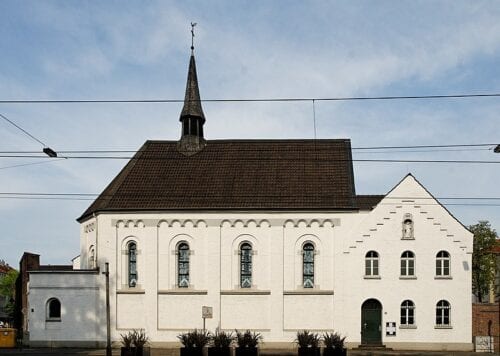
In 1859, two sisters from Tongeren left for Düsseldorf, Germany, for a foundation. The final monastery was completed in 1863.
Due to government repression, the Poor Clares of Düsseldorf took refuge in Harrefeld (Netherlands), and from there sent two groups of founding sisters to Cleveland (USA) and Rio de Janeiro (Brazil).
Our Lady of the Angels Monastery
Rio de Janeiro, Brazil
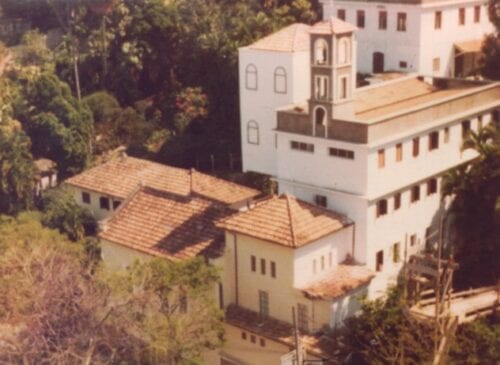
On September 25, 1928, the eight sisters chosen for the erection of Our Lady of the Angels of the Porziuncola Monastery arrived in Rio de Janeiro. They were: Mo. Maria Seráfica, Sr. Maria Juliana, Sr. Maria Boaventura, Sr. Maria Clara, Sr. Maria Agnela, Sr. Maria Columba, Sr. Maria Imaculada, and Sr. Maria Terezinha.
- Mo. Maria Seráfica of the Most Blessed Sacrament, OSC
- Sr. Maria Juliana of the Most Blessed Sacrament, OSC
- Sr. Maria Agnela of the Sacred Heart of Jesus, OSC
- Sr. Maria Boaventura of the Holy Face, OSC
- Sr. Maria Imaculada of the Conception, OSC
- Sr. Maria Columba of the Child Jesus, OSC
Our Lady of Guadalupe Monastery
Caicó – RN
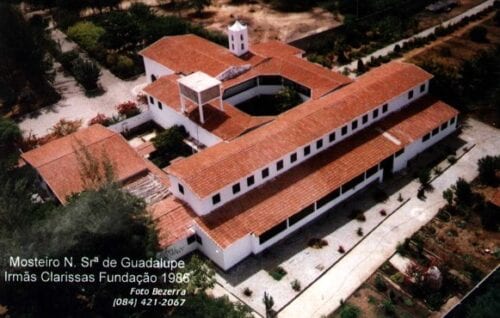
The then Bishop of the diocese of Caicó-RN, Dom Heitor de Araújo Sales, made several requests for the erection of a Monastery of the Order of St. Clare in his diocese. The request was accepted in 1984 by Our Lady of the Angels Monastery, RJ.
For the foundation were sent: Sr. Maria Colette of the Sacred Heart of Jesus, vicaress; Sr. Maria Ângela of the Most Blessed Sacrament; Sr. Maria Madalena of the Holy Cross; Sr. Marlene Inácia of Jesus the Host; Sr. Maria do Rosário de Fátima of the Resurrection; Sr. Maria José de Jesus (novice); Sr. Francis Maris of the Immaculate (novice); Sr. Lúcia Maria of the Immaculate Heart (novice). It was June 12, 1984.
Mosteiro Maria Imaculada
Marília – SP
Between 1997 and 1998, Fr. Irineu Andreassa, OFM, requested a foundation for the city of Marília, SP, from Our Lady of Guadalupe Monastery. Praying and trusting in God's Providence, the sisters accepted.
Pontifical approval for the foundation took place on July 16, 1999.
Our founders: Mo. Marlene Inácia of Jesus the Host, Sr. Francis Maris of the Immaculate, Sr. Maria Madalena of the Sorrowful Virgin, Sr. Maria Inês of the Child Jesus, Sr. Maria Francisca of the Five Wounds, Sr. Isabela of Holy Mary of the Angels, and some postulants, arrived in Marília on September 19 of the same year. The community remained in a provisional house until construction was completed. The inauguration took place on November 15 of the following year.
Refoundation of Nazareth Monastery
Lages – SC
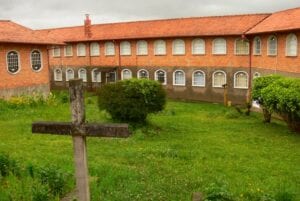
In 2011 a group of sisters from our community left to revitalize the Monastery of Lages, SC, at the request of the local bishop at the time, Dom Frei Irineu Andreassa, OFM. In 2012, the Monastery became autonomous.